

How does a pacemaker work?
How does a pacemaker work?
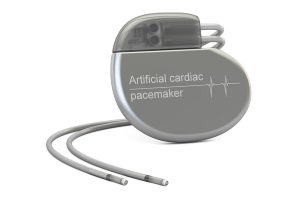
A pacemaker has two different functions. Firstly, it continuously observes the heart rhythm in order to detect abnormal rhythms (sensing). When heartbeats are too slow, the pacemaker stimulates the heart muscle by sending electrical signals which correct the slow heart rhythm (pacing). In other words, the pacemaker “senses” the heart rhythm continuously, but “paces” the heart only when needed.
Pacemakers have additional functions in order to optimize the heart rhythm. One of these functions is the sensor function (so called rate response). A sensor detects physical activity (either via the body motion, the breathing rate or cardiac contractility) and based on that the pacemaker increases the heart rate when needed (e.g. during exercise).
A pacemaker consists of two parts:
- The pulse generator: a small metal case which contains the battery of the pacemaker and the electrical circuit which senses the heart beats and produces the electrical signals.
- The leads: thin insulated wires connected with the pulse generator at one end and a chamber of the heart on the other end. The leads are implanted via a vein in the chest below the clavicle and advanced to the heart. The electrodes deliver the electrical signals to the chamber that the pacemaker “paces”, controlling the rate of the heart rhythm. They also “sense” the electric activity of the heart, sending this information back to the pulse generator.


