

What happens if I get a shock from ICD?
What happens if I get a shock from ICD?
There are different types of ICDs:
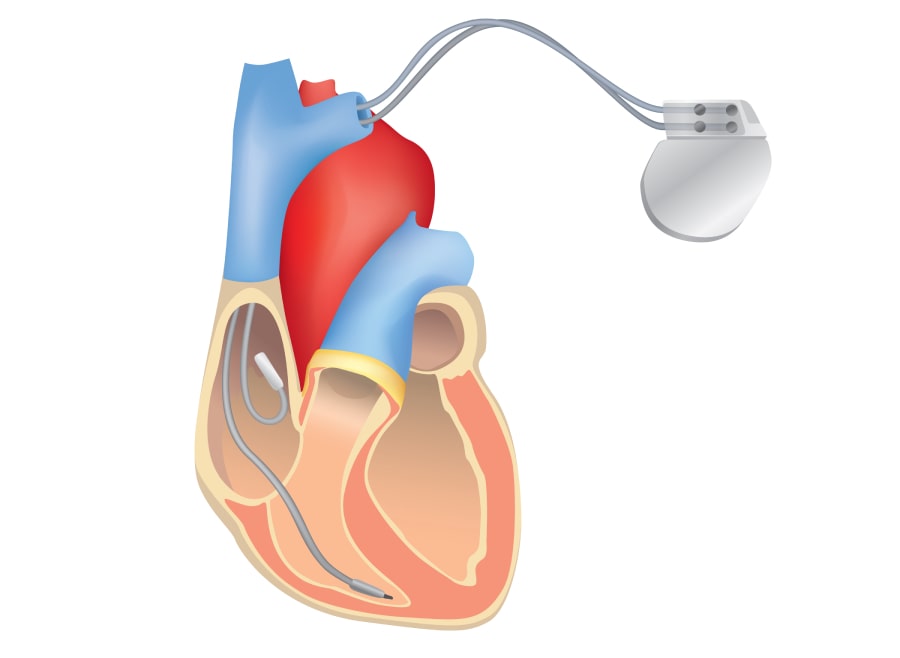
- Transvenous (endocavitary) ICDs whose box is located at the level of the chest, in front or behind the major chest muscle and the leads reach the heart by passing through nearby vessels which are approached during the implantation. Transvenous ICDs can deliver defibrillation shocks or stimulate the heart faster than an arrhythmia to stop it. They can also pace the heart exactly as a pacemaker. Depending on your condition, they can have one (single chamber ICD), two (dual chamber ICD) or three leads (resynchronization therapy and defibrillation, called CRT-D)
- Subcutaneous ICDs (S-ICDs), whose box is located under the skin of the chest in the region under the arm and the lead is placed under the skin to the front of the chest. These are only capable of delivering defibrillation shocks.


