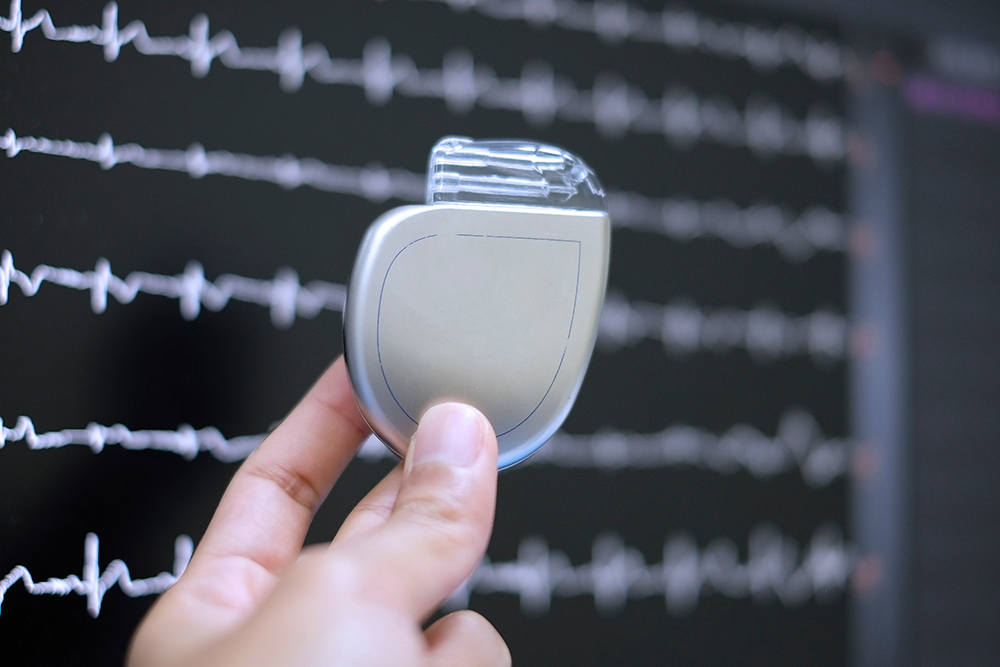
An implantable cardioverter-defibrillator (ICD), also called defibrillator, is a cardiac device implanted in order to detect and stop dangerously fast heart rhythms (ventricular tachycardia and ventricular fibrillation). It is a battery-powered device which continuously monitors the heart rhythm. When an abnormally fast ventricular heart rhythm is detected, the ICD delivers either painless short and fast electrical stimuli (often only 8 beats) or a painful electric shock in order to restore a normal heart rhythm.
A transvenous ICD has a pacemaker ability as well. This means that once an ICD is implanted, both slow and fast rhythms can be treated. Some ICDs may also have Cardiac Resynchronisation Therapy (CRT) functions if needed.
The size and shape of an ICD may vary depending on the manufacturer and model. ICDs are in general larger than pacemaker/ biventricular pacemaker, as the generator box has additionally defibrillating function and is larger.
FREQUENTLY ASKED QUESTIONS
What is defibrillation?
Defibrillation is the process of delivering a controlled electric shock to stop a severe ventricular abnormal heart rhythm.
How does a defibrillator differ from a pacemaker?
While both devices can correct slow rhythms, only defibrillator can correct fast, life-threatening rhythms by delivering therapies such as shocking.
Can a defibrillator prevent sudden cardiac arrest?
Yes, implantable cardioverter-defibrillators (ICDs) are specifically designed to prevent sudden cardiac arrest by detecting and stopping dangerous arrhythmias.
Who might need an implantable defibrillator (ICD)?
People with a history of heart attack, heart failure, or genetic conditions that predispose them to life-threatening arrhythmias may benefit from an ICD.
Are there any activities or devices to avoid with an ICD?
With the exception of contact sports with a risk of device trauma, exercise restrictions are related to the underlying disease and as such, you should talk to your physician about your doubts. Regarding devices, people with ICDs should avoid close proximity to strong electromagnetic fields, such as industrial equipment or MRI machines, as these can interfere with the device.
How often does an ICD need to be checked or replaced?
ICDs require regular follow-up checks to ensure proper function. Batteries typically last 5-10 years, after which the device needs replacement.