

How does an implantable heart rhythm monitor work (ILR)
How does an implantable heart rhythm monitor work (ILR)
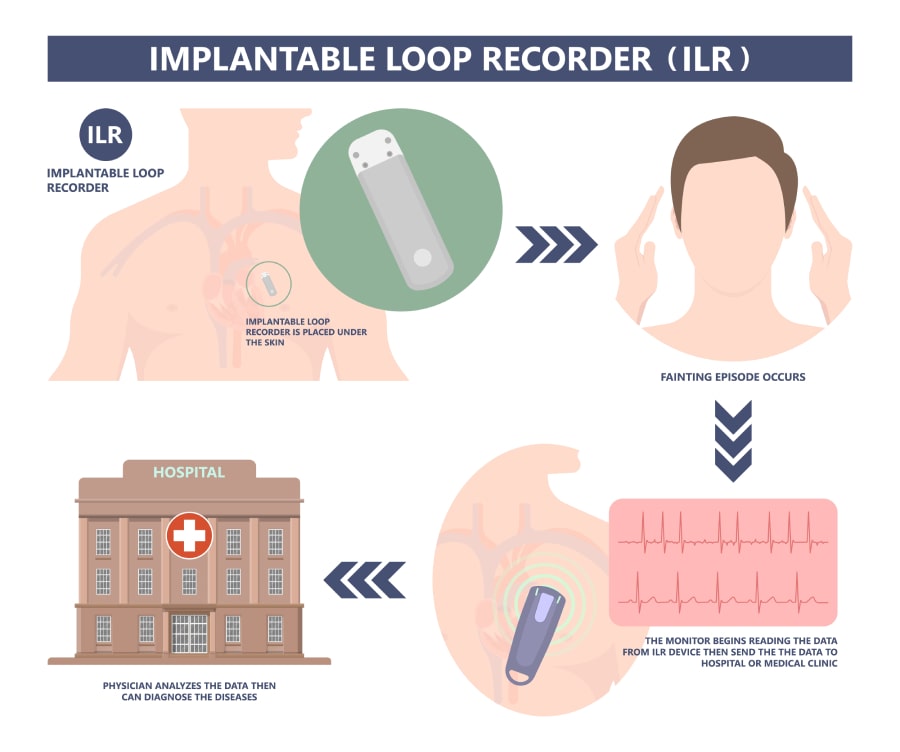
This small device which is implanted under your skin constantly records a signal comparable to that of the electrocardiogram. Due to the memory storage capacity of this device, it only keeps the recorded tracing in two situations:
- Either because you have sent a signal to the device asking for keeping the tracing. This corresponds to situations in which you were experiencing a symptom and you want the recorded tracing at the time of the symptom to be kept.
- Or you have situations in which the device itself considered that your tracing could be abnormal due to high or slow heart rate or to an irregular rhythm.
It is very important to understand that the tracing which is stored in memory corresponds to the one recorded during the few minutes preceding the activation by you or by the device itself. It is therefore very important to always know the procedure for activating memory storage and to implement it as soon as possible after a symptom. If activated too late, the stored tracing will no longer correspond to the time of the symptom.
The traces stored in memory are very easy to analyze by the implantation center: either by interrogating the device in your presence, or by remote transmission.


